TL;DR: BioSpa’s chemical peel program in Newport Beach offers a physician-curated menu of clinically validated peels, including Cosmelan, Perfect Derma Peel, SkinMedica Illuminize/Vitalize/Rejuvenize, ZO 3-Step Peel, and ZO Controlled Depth Blue Peel. Each protocol is matched to your Fitzpatrick skin type, depth of concern, and downtime tolerance, and is overseen by board-certified plastic surgeons with over 35 years of combined aesthetic experience.
Not All Peels Are Created Equal, And Most Practices Don’t Offer the Ones That Work
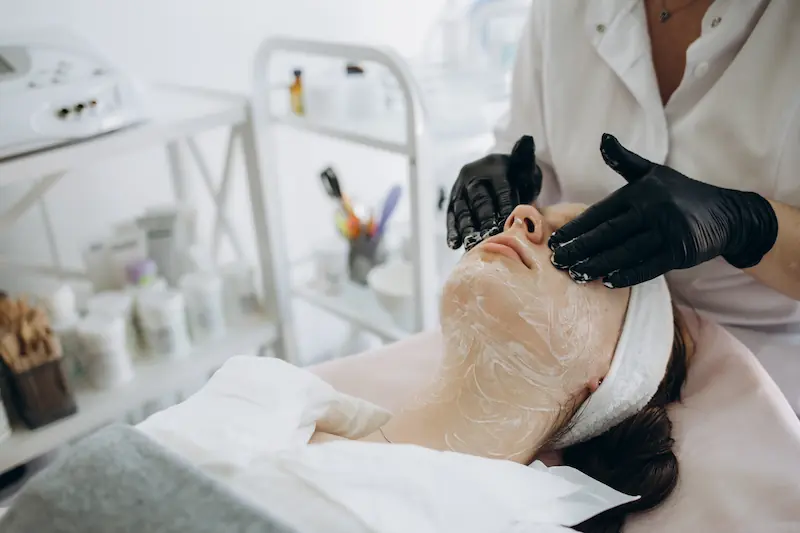
Your skin renews itself on a fixed biological schedule. Every 28 to 40 days, new keratinocytes migrate from the deepest layer of your epidermis to the surface, where they shed, taking discoloration, surface damage, and uneven texture with them. The problem is that sun exposure, hormonal shifts, and age progressively disrupt that cycle, melanin accumulates unevenly, collagen cross-linking slows, and the skin’s natural renewal rate falls behind the pace of damage. A precisely formulated chemical peel accelerates that cycle deliberately, using controlled biochemical exfoliation to trigger the repair mechanisms your skin already possesses, at a depth and concentration calibrated to your specific skin type and concern.
For decades, the standard approach to chemical peeling meant choosing from a short menu: a light glycolic or lactic acid peel for maintenance, or a deeper TCA or phenol application for more significant resurfacing. These acids have a well-documented clinical record. TCA-based protocols have been studied extensively for photoaging and post-inflammatory hyperpigmentation, and superficial glycolic peels have demonstrated consistent efficacy in acne and mild dyschromia across skin types. The science behind these foundational peels is well-established, and they remain a legitimate tool in dermatologic practice.
But a single-acid, one-depth approach is no longer the most precise version of chemical exfoliation available, and at BioSpa, we do not offer a simplified menu when a clinically superior, skin-type-matched protocol exists.
BioSpa’s chemical peel program is built around a curated selection of physician-formulated and clinically validated systems, each chosen because it addresses a specific mechanism of skin damage with a level of precision that single-ingredient peels cannot replicate. Where a standard TCA peel resurfaces, the Perfect Derma Peel combines TCA with glutathione, retinoic acid, and kojic acid to simultaneously exfoliate, interrupt melanin synthesis, and support antioxidant activity at the cellular level. Where a basic glycolic targets surface texture, the Cosmelan protocol works across multiple enzymatic pathways to correct stubborn pigmentation that photodamage and hormonal changes have deposited beneath the surface. The ZO Controlled Depth Blue Peel and SkinMedica Illuminize, Vitalize, and Rejuvenize systems extend that range further, calibrated by depth, downtime, and Fitzpatrick skin type. Not a product lineup. A protocol matched to your biology.

What Chemical Peels Actually Do
A chemical peel is a controlled application of one or more exfoliating agents to the skin at a specific depth, triggering a wound-healing response that replaces damaged tissue with healthier, more evenly pigmented skin. The depth of that response, and therefore the degree of improvement, is determined by the type of acid or acid combination used, its concentration, the number of passes applied, and the condition of the skin receiving it.
At the superficial level, peels work primarily within the epidermis, accelerating desquamation and improving surface texture, tone, and mild discoloration. Alpha-hydroxy acids such as glycolic acid have been shown to increase epidermal cell turnover and improve the appearance of photodamaged skin with minimal recovery time. Medium-depth peels penetrate into the papillary dermis, stimulating collagen remodeling and addressing deeper pigmentation, fine lines, and acne scarring. Deep peels reach the reticular dermis and produce the most dramatic results, but require the most recovery and the most careful patient selection.
The peels offered at BioSpa span this full range, with each system selected for its clinical evidence base, its safety profile across skin tones, and its compatibility with the patient population we serve in Newport Beach and throughout Orange County.
Peel Comparison: Depth, Downtime, and Best Candidates
|
Peel |
Depth |
Downtime |
Best For |
Skin Type |
|---|---|---|---|---|
|
SkinMedica Illuminize |
Superficial |
None |
Maintenance, first-time patient |
All |
|
SkinMedica Vitalize |
Superficial |
2–5 day |
Mild photodamage, acne |
I–IV |
|
SkinMedica Rejuvenize |
Superficial+ |
3–7 day |
Moderate photodamage, pigmentatio |
I–IV |
|
ZO 3-Step Peel |
Superficial–Medium |
3–5 day |
Texture, mild scarring |
I–IV |
|
Cosmela |
Superficial–Medium |
7–10 day |
Melasma, hyperpigmentatio |
III–VI |
|
Perfect Derma Peel |
Medium |
5–7 day |
Scarring, tone, sun damage |
I–VI |
|
ZO Controlled Depth Blue Peel |
Medium |
7–10 day |
Significant photodamage, laxity |
I–III |
Chemical Peels and Skin Tone: What You Need to Know
One of the most persistent misconceptions about chemical peels is that they are not safe for darker skin tones. The reality is more nuanced. Certain peels, particularly high-concentration TCA and phenol-based protocols, carry a higher risk of post-inflammatory hyperpigmentation (PIH) in patients with Fitzpatrick types IV through VI when applied without appropriate pre-treatment or depth control. Chemical peels can be performed safely and effectively in patients with darker skin tones when the correct peel type, concentration, and pre-treatment protocol are selected.
At BioSpa, every peel consultation includes a Fitzpatrick skin type assessment. Patients with types III through VI are typically directed toward Cosmelan, the Perfect Derma Peel with appropriate pre-treatment, or the SkinMedica superficial series, all of which have demonstrated favorable safety profiles in higher phototypes. The ZO Controlled Depth Blue Peel and deeper TCA protocols are reserved for types I through III, or for higher phototypes only after a structured pre-treatment phase.

What to Expect: Before, During, and After
Before Your Peel
Your provider will review your skin history, current medications, and any prior peel or laser treatments. Depending on the peel selected, you may be asked to begin a pre-treatment regimen 2 to 4 weeks in advance, which may include a retinoid, a tyrosinase inhibitor, or a broad-spectrum SPF 30+ sunscreen. Patients on isotretinoin are typically asked to discontinue use for 6 to 12 months before any medium-depth peel. Retinoid pre-treatment has been shown to accelerate post-peel healing and improve the uniformity of acid penetration.
During Your Treatment
Most peels are completed in 30 to 60 minutes. You will feel a mild to moderate stinging or warming sensation during application, which subsides quickly. Deeper peels may involve a brief period of more intense sensation. Your provider will monitor your skin throughout the application and neutralize the peel at the appropriate endpoint.
After Your Peel
Superficial peels typically produce 1 to 5 days of mild flaking or tightness. Medium-depth peels produce more visible peeling over 5 to 10 days. You will be given specific post-care instructions, including a gentle cleanser, a barrier-supportive moisturizer, and a broad-spectrum SPF. Sun avoidance is essential during the healing phase. Post-inflammatory hyperpigmentation risk is significantly reduced with consistent broad-spectrum sun protection following chemical peel treatment.
Why BioSpa, Why These Physicians
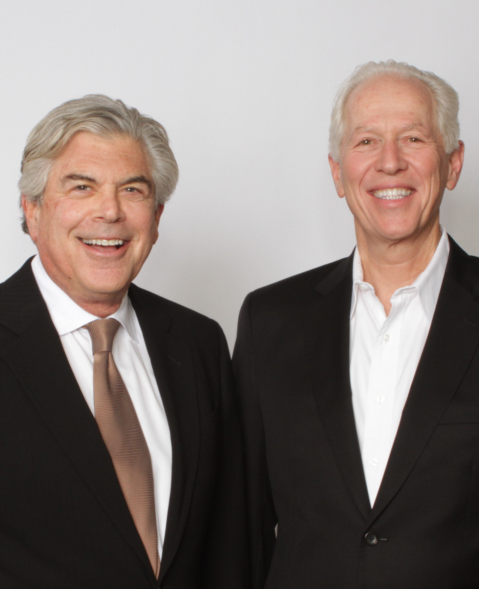
BioSpa was founded by Dr. Jed Horowitz and Dr. Larry Nichter, two of Orange County’s most credentialed plastic surgeons, on a straightforward premise: that medical-grade aesthetic care should be delivered with the same rigor as surgical care. Both physicians are board-certified by the American Board of Plastic Surgery, members of the American Society of Plastic Surgeons and the American Society for Aesthetic Plastic Surgery, and have been practicing in Newport Beach for over 35 years.
Dr. Horowitz is a Fellow of the American College of Surgeons and the developer of the LiteLift®, a minimally invasive facelift technique he pioneered and has taught to surgeons internationally. He serves on the medical staff at Hoag Hospital and brings a surgeon’s understanding of facial anatomy to every skin treatment protocol he oversees.
Dr. Nichter holds triple board certification in plastic surgery, general surgery, and hand surgery, and has served as Chair of Plastic Surgery at Hoag Hospital and as a clinical professor at both USC and UCI. He is the founder of Mission Plasticos, a nonprofit providing reconstructive surgery to underserved populations in Latin America, and is the subject of an Academy Award-winning documentary. His research contributions to the field of aesthetic medicine span peer-reviewed publications, surgical technique development, and outcomes-based practice.
At BioSpa, chemical peel protocols are not delegated to unsupervised aestheticians. Every treatment plan is reviewed and approved by Dr. Horowitz or Dr. Nichter, and medium-to-deep peels are performed under direct physician supervision. That level of oversight is not standard at most medical spas. At BioSpa, it is the baseline.
Explore our full range of specialty skin rejuvenation treatments or learn more about our ZO Skin Health protocols and SkinMedica treatments.

Frequently Asked Questions
How Do I Know Which Peel Is Right for My Skin?
The right peel depends on your Fitzpatrick skin type, your primary concern (pigmentation, texture, acne scarring, fine lines), your downtime tolerance, and your history with prior treatments. Your BioSpa provider will assess all of these factors during your consultation and recommend a protocol, not just a product.
Can I Get a Chemical Peel If I Have Darker Skin?
Yes, with the right peel selection and pre-treatment protocol. Cosmelan and the Perfect Derma Peel (with appropriate preparation) are both formulated for use across a wide range of skin tones, including Fitzpatrick types III through VI. Research supports the safe use of carefully selected chemical peels in patients with darker skin tones when depth and acid type are matched to phototype.
How Many Treatments Will I Need?
Superficial peels are often performed in a series of 3 to 6 treatments spaced 3 to 4 weeks apart. Medium-depth peels such as the Perfect Derma Peel or ZO Controlled Depth Blue Peel may produce significant improvement in a single session, with maintenance treatments recommended annually or as needed. Your provider will outline a treatment plan at your consultation.
Is There Anything I Need to Stop Using Before My Peel?
Yes. Depending on the peel selected, you may need to pause retinoids, exfoliating acids, or certain prescription medications in the days before treatment. Patients on isotretinoin should discontinue use for 6 to 12 months before any medium-depth peel. Your provider will give you a complete pre-treatment checklist at your consultation.
What Is the Difference Between a Medical-Grade Peel and a Spa Peel?
Medical-grade peels use higher concentrations of active acids, penetrate to greater depths, and require physician oversight for safe application. Spa peels are typically limited to superficial concentrations that do not require a medical license to apply. The peels offered at BioSpa are all medical-grade formulations, selected and supervised by board-certified plastic surgeons.
Schedule Your Consultation
BioSpa serves patients throughout Newport Beach, Irvine, Costa Mesa, Laguna Beach, and the greater Orange County area. If you are ready to find out which chemical peel protocol is right for your skin, we invite you to schedule a consultation with our team. Your provider will assess your skin type, review your goals, and build a treatment plan designed around your biology, not a menu.
Source Index
- Sharad J. Glycolic acid peel therapy — a current review. Clinical, Cosmetic and Investigational Dermatology. 2013. https://www.ncbi.nlm.nih.gov/pmc/articles/PMC9787425/
- Sarkar R, et al. Combination of glycolic acid peeling with topical regimen in melasma. Journal of Cutaneous and Aesthetic Surgery. 2019. https://www.ncbi.nlm.nih.gov/pmc/articles/PMC6122508/
- Garg VK, et al. Chemical peeling in melasma: a systematic review. Journal of Cutaneous and Aesthetic Surgery. 2009. https://www.ncbi.nlm.nih.gov/pmc/articles/PMC3560164/
- Kontochristopoulos G, et al. Chemical peels: what’s new and what isn’t new but still works well. Facial Plastic Surgery Clinics of North America. 2024. https://pubmed.ncbi.nlm.nih.gov/38530985/
- Brody HJ. Trichloroacetic acid application in chemical peeling. Operative Techniques in Plastic and Reconstructive Surgery. 1995. https://pubmed.ncbi.nlm.nih.gov/15008867/
- Rendon MI, et al. Evidence and considerations in the application of chemical peels in skin disorders and aesthetic resurfacing. Journal of Clinical and Aesthetic Dermatology. 2021. https://www.ncbi.nlm.nih.gov/pmc/articles/PMC8423570/
- Sonthalia S, et al. Glutathione as a skin-lightening agent: facts, myths, evidence and controversies. Indian Dermatology Online Journal. 2016. https://www.ncbi.nlm.nih.gov/pmc/articles/PMC4445894/
- Dayal S, et al. Salicylic acid peels versus glycolic acid peels in mild-to-moderate acne vulgaris. Journal of Cutaneous and Aesthetic Surgery. 2017. https://www.ncbi.nlm.nih.gov/pmc/articles/PMC4554394/
- Oresajo C, et al. Retinoids in the treatment of skin aging. Journal of Drugs in Dermatology. 2018. https://www.ncbi.nlm.nih.gov/pmc/articles/PMC5724304/
- SkinMedica. Illuminize, Vitalize, and Rejuvenize Peel product information. https://www.skinmedica.com/treatments/peels
THE BIOSPA BLOG
Treat Your Skin To A Pumpkin Peel
There is no denying “pumpkin and spice make everything nice.” From your favorite pumpkin spice latte to your mom’s freshly baked pumpkin pie, but have you ever considered the benefits of slathering pumpkin on your skin? Pumpkin contains a significant